
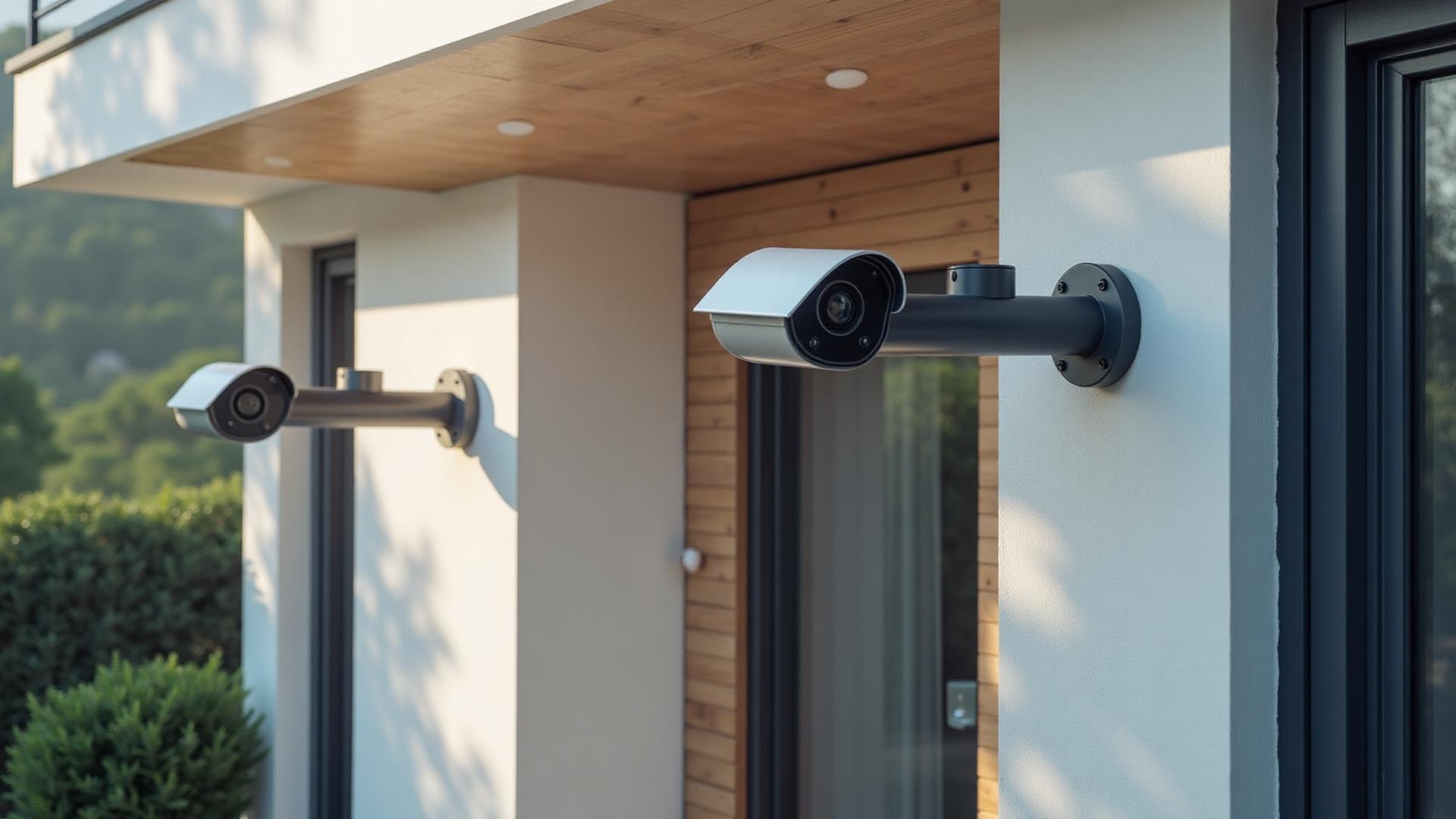
A Cambridge property can have more than one kind of approach: a front entrance in Galt, a rear service door in Preston or a long driveway toward Hespeler. Cameras should be positioned to answer the questions each approach raises. Slinger Solutions designs video coverage for homes and businesses, then makes sure the recording, network and access are practical to use. We start with the property, not a fixed camera package.
Identify the moments that matter
Do you need to see a person at the front door, activity around a parked vehicle or deliveries behind a shop? Each goal calls for a different field of view. A high-mounted overview camera may capture movement but miss facial detail. A tightly framed entry camera can provide detail but not show the whole yard. At an older Galt home, an addition or side passage may complicate coverage. We map those trade-offs before recommending camera count and positions.
Think about the property after dark
Water reflections, bright storefront signs, garage lighting and headlamps can change the image at night. We review the local lighting conditions rather than promising identical day and night footage. For a quiet residential street in Hespeler, a porch light may provide useful illumination at one entrance but leave a side path dark. We discuss low-light-capable equipment, camera angles and supplementary lighting where appropriate. Even a high-resolution camera cannot recover detail that was never visible at the selected distance.
Equipment matched to the brief
Axis cameras offer options for demanding residential and commercial applications. UniFi Protect can be a sensible fit where a UniFi network is already present and local video management is a priority. We compare the platforms against the actual coverage, networking and storage goals rather than presenting one product as the answer to every job. Lens selection, weather exposure and access to a cable route influence the recommendation as much as a headline resolution number. We explain the reason for each camera in the proposal.
Recording needs room to work
Footage must be stored somewhere. We size and discuss recording around camera count, image settings and the amount of history you need. A small residential installation and a busy commercial entrance have different activity levels and therefore different storage demands. We show how to search and export video, and review access for family members or authorised staff. A system that produces footage nobody knows how to retrieve is not finished. Ownership of the recording equipment and accounts should remain clear after handover.
Infrastructure makes the images reliable
Camera locations may be constrained by power, cable distance or the route back to network equipment. Detached structures and older masonry buildings around Cambridge deserve an especially careful survey. We plan connectivity before mounting devices and review what happens if the internet connection is interrupted; local recording and remote access are different capabilities. Security of administrative accounts also matters. We help set up an arrangement that does not depend on a former occupant or contractor keeping access credentials.
Cover your property, not everyone else's
Camera framing should focus on the entrance, walkway, driveway or work area you intend to observe. In dense Preston streets or mixed-use spaces, a slight change of angle can make a meaningful difference to neighbouring privacy. Owners should consider rules that apply to recording employees, shared areas or the public. We can position and review the views with that in mind. If an existing alarm is present, we can also examine whether camera coverage would provide helpful context for its events without mistaking video for an alarm sensor.
The site visit comes first
Share the times and places you most want to review, particularly if a side entrance or detached structure is involved. We inspect feasible mounting points and cable routes and discuss whether the recorder can be located somewhere secure and accessible. If footage must be reviewed by multiple people, we plan permissions early. A Cambridge consultation should produce a clear description of coverage and storage, not simply a camera count. We will explain where the proposed layout may still have limitations before you commit to an installation.
Common questions
Can a camera cover a detached Cambridge garage?
Possibly. We assess cable routes, power, distance and network connectivity before recommending the camera and recording approach.
Do cameras still record when the internet goes down?
That depends on the selected system. Locally recorded systems may continue recording on site while remote viewing is unavailable; we explain the specific configuration.
Will a wider-angle camera remove blind spots?
A wider view can cover more area but may show less identifying detail at a distance. We balance overview and detail for each location.
Can you add cameras to an existing network?
We can assess its switching, cabling, capacity and administrative access. Whether it should be reused depends on the condition and requirements of the installation.